The Outline of the 15th Five-Year Plan clearly puts forward "promoting the integration of trade and investment" and emphasizes "guiding the rational and orderly cross-border layout of industrial chains and supply chains". At present, the global industrial chain and supply chain are undergoing accelerated restructuring. As a founding member of the Shanghai Cooperation Organization (SCO), China plays a pivotal role in system construction. How to optimize the overseas layout of industrial chains and enhance the discourse power in global economic governance; how to break through traditional cooperation models and innovate industrial cooperation mechanisms have become key issues serving the overall situation of China’s opening-up to the outside world. To this end, this issue of Theoretical Research features an exclusive interview with Edmund Sheng, Distinguished Professor at Shandong University and Executive Dean of the Shanghai Cooperation Organization Research Institute. He believes that amid profound changes unseen in a century, the global economic governance system is confronted with fragmentation and blocization, and regional cooperation has become a key solution. It can effectively address the shortcomings of global economic governance and drive its transformation from fragmentation to inclusiveness.
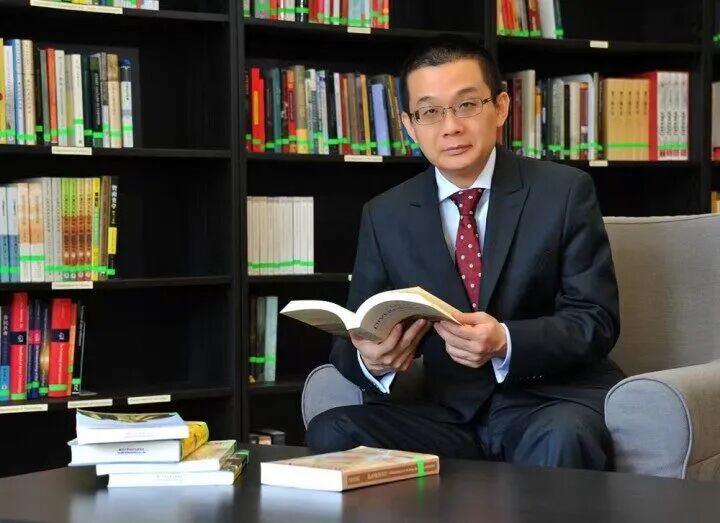
Professor Edmund Sheng, Distinguished Professor at Shandong University, Executive Dean of the Shanghai Cooperation Organization Research Institute, Taishan Scholar Distinguished Expert, and Honorary Professor of the China-SCO College of Economics and Trade.
Transforming Industrial Cooperation Advantages into Discourse Power in Global Governance
Financial Times Reporter: The Outline of the 15th Five-Year Plan proposes to "actively participate in and lead global economic governance" and stresses "actively putting forward China’s proposals for international rules in emerging fields". In your view, how can China translate its industrial cooperation advantages into institutional discourse power and contribute China’s solutions amid the restructuring of global industrial chains and the reform of the international governance system?
Edmund Sheng: To translate the scale advantages of industrial cooperation into institutional discourse power, we must upgrade from exporting products to exporting rules and from adapting to standards to defining standards. Against the backdrop of the 15th Five-Year Plan and the restructuring of global industrial chains, China can strive to become a builder of the global economic governance system and take a more open and pragmatic approach to fulfill its responsibilities in the following aspects.
First, embed standards in emerging sectors driven by green and digital engines. Countries are largely at the same starting line in the two new tracks of green development and digital economy. Leveraging the mature experience in green manufacturing and industrial internet from provinces with complete industrial chains nationwide is essential to take the lead. For example, when investing in new energy projects or building digital infrastructure in SCO member states, China should not only deliver equipment but also export construction standards, operation and maintenance specifications, and data interface protocols simultaneously. When the underlying industrial logic of recipient countries is built on China’s technical specifications, such technological embedding naturally translates into institutional discourse power.
Second, consolidate standards through financial empowerment and platform support. The key to the global acceptance of standards lies in their ability to deliver tangible benefits. Policy-based financial institutions should be guided to prioritize the adoption of the "green-digital" standards promoted by platforms such as the SCO Demonstration Zone when supporting industrial upgrading projects in the SCO region. Meanwhile, digital platforms like the Silk Road E-commerce should be utilized to integrate trade rules, electronic documents, and local currency settlement agreements into every link of cross-border transactions. In fact, when these technical specifications become prevailing norms for trade, China will establish a regional economic and trade governance network centered on itself.
Third, contribute a systematically integrated Chinese model to the rebalancing of "security-efficiency" in global industrial chains. The current global economic governance system faces fragmentation, and traditional vertical division of labor is becoming ineffective. The unique value of China’s solution lies in providing a template for the integrated overseas expansion of complete industrial chains. We should shift from single-project cooperation to building closed-loop industrial chains. For instance, instead of merely mining resources in recipient countries, China should build smelting bases there in line with Chinese environmental standards, supported by China’s logistics rules and financial services. This complete industrial chain cooperation model not only helps SCO member states achieve industrialization but also, through deep interweaving of industrial chains, offers a new alternative to Western models for global industrial and supply chain stability—a win-win solution with shared interests and risks.
Finally, pilot demonstration zones to provide new institutional solutions for global governance reform. Micro-level practices of high-level platforms such as the SCO Demonstration Zone in rule alignment and cross-border data flow should be refined into replicable and promotable experience. Through the SCO framework, these mature local practices can be elevated to regional multilateral consensus and further transformed into international standards for economic governance in emerging fields. This not only serves SCO member states but also demonstrates China’s capability to provide public goods and formulate universal rules in green transformation and digital governance through such successful regional cases.
Promoting Vertical Industrial Chain Integration Under the SCO Framework
Financial Times Reporter: The Outline of the 15th Five-Year Plan calls for "guiding the rational and orderly cross-border layout of industrial chains and supply chains" and requires "developing a high-standard pilot zone for Silk Road E-commerce cooperation". How can China leverage the SCO framework to elevate industrial cooperation from traditional trade in goods to in-depth vertical integration of industrial chains?
Edmund Sheng: In the first year of the 15th Five-Year Plan, enhancing the resilience and security of industrial chains and supply chains has evolved from a purely economic and trade issue to a national security concern related to the new round of major-country competition. SCO member states are key supports for China to hedge external risks and ensure strategic depth. Against the trend of global industrial and supply chain restructuring, China should leverage the SCO framework to replace traditional trade cycles with systematic ecological cooperation.
Recently, with the support of the Shandong Provincial Department of Commerce, the SCO Research Institute conducted a study on optimizing the industrial cooperation mechanism between Shandong Province and SCO member states. The research systematically reviewed the status quo of bilateral cooperation, identified key convergence points in three dimensions—resource processing, equipment manufacturing, and technology empowerment—and proposed an optimization path centered on building a four-in-one collaborative mechanism of "government guidance, enterprise dominance, platform support, and financial empowerment" and three strategic priorities. Based on these findings, I would like to share my views on your question. First, realize the transformation from fragmented cooperation to institutional arrangements through the four-in-one collaborative mechanism. Optimizing overseas investment layout cannot rely solely on spontaneous enterprise behavior; it requires institutional arrangements to reduce transaction costs and shift industrial chain cooperation from ad-hoc project connections to stable ecological development. Second, implement strategic swaps of resources and production capacity to build an industrial security barrier. China should leverage its advanced processing capacity to deeply integrate with the resource endowments of SCO member states, shifting from purchasing resources to exchanging resources. By building deep-processing bases, grain depots, and energy corridors in recipient countries, China’s capacity output can be tied to the resource supply of partner nations, forming a long-term mechanism of shared interests and risks to ensure the security of key resource supplies. Third, drive industrial chains toward high-end development through green and digital dual engines. China should not only leverage its leading position in new energy and low-carbon technologies to translate its "dual carbon" practices into regional solutions, export green standards, and build zero-carbon industrial demonstration parks but also deepen Silk Road E-commerce cooperation. Through cross-border payment, alignment of digital standards, and export of industrial internet, information asymmetry can be eliminated to realize full-process digital collaboration across industrial chains.
Systematically Reducing Transaction Costs for Enterprises’ Overseas Industrial Chain Layout
Financial Times Reporter: The Outline of the 15th Five-Year Plan emphasizes "effectively implementing outward investment management and improving the comprehensive overseas service system". You propose building a four-in-one collaborative mechanism of "government guidance, enterprise dominance, platform support, and financial empowerment" to drive enterprises from "going it alone" to "systematically expanding overseas as integrated industrial chains". In this process, how can transaction costs for enterprises’ overseas industrial chain layout be systematically reduced?
Edmund Sheng: Amid the current rebalancing of security and efficiency in global industrial chains, enterprises’ overseas expansion has shifted from simple trade to in-depth embedding of complete industrial chains. The core of the four-in-one mechanism is to address pain points such as decision-making information gaps, high financing costs, and compliance difficulties that enterprises face when going it alone. The following measures are recommended.
First, establish a chain-based cross-departmental collaborative guarantee system. A "joint meeting mechanism for overseas industrial chain layout" involving multiple departments should be set up. For key regions such as the SCO member states, a dynamically updated Guidance Catalogue for Complete Industrial Chain Overseas Expansion should be formulated, clarifying key countries, priority fields, and project lists to align national strategies with enterprise actions. The model of "leading enterprises driving and group-based overseas expansion" should be promoted. Leading enterprises with dominant positions in industrial chains, such as Wanhua Chemical and Weichai Power, should be encouraged to take the lead in uniting upstream and downstream small and medium-sized supporting enterprises to jointly develop overseas industrial parks. The government’s guarantee system should serve the entire overseas industrial chain cluster rather than individual enterprises, providing green channels for approval, visa processing, and customs clearance.
Second, build a cross-border risk hedging policy support system, which is key to reducing institutional transaction costs. Surveys show that financing difficulties, exchange rate risks, and payment barriers are the most pressing challenges for enterprises. A multi-level investment and financing system involving government guidance, development finance, and commercial capital should be improved, with special funds established to support large-cycle projects such as resource-for-infrastructure swaps and green energy transformation. For small and medium-sized supporting enterprises, trade data-based financial instruments should be promoted, with credit limits verified through digital platforms to address the difficulty of using overseas assets as collateral. For example, the coverage depth of policy-based insurance such as China Export & Credit Insurance Corporation (Sinosure) should be strengthened to provide higher compensation ratios for uncontrollable risks such as geopolitical conflicts, expropriation, and war. Forward foreign exchange settlement and sales, swaps, and other risk hedging tools should be promoted with certain risk compensation or premium subsidies to reduce direct losses caused by sharp external exchange rate fluctuations.
Third, reduce enterprises’ institutional transaction costs. A national-level digital platform for supporting overseas expansion should be built, and existing platforms such as the China-SCO Local Economic and Trade Cooperation Comprehensive Service Platform should be upgraded. Through big data, one-stop services such as national legal environment assessment, standard recognition inquiry, and tax compliance guidance can be provided, turning implicit institutional barriers into explicit digital guidelines. Promoting Chinese standards and experience can also reduce institutional transaction costs. For example, Shandong’s modern agricultural standards and power technology standards can be promoted in Russia, Kazakhstan, and other countries. Once standards are mutually recognized, implicit costs for enterprises in technological transformation and parts matching will drop significantly. In addition, establishing an efficient, professional, and neutral regional arbitration center within the SCO framework will help improve the protection of intellectual property rights and the enforcement of contracts, encouraging enterprises to sign long-term contracts and make heavy-asset investments.
Building a Benchmark Platform for Institutional Opening-Up
Financial Times Reporter: How can the SCO Demonstration Zone’s institutional innovation functions in rule alignment, standard mutual recognition, and cross-border data flow be strengthened to make it a benchmark platform for China’s institutional opening-up toward SCO member states?
Edmund Sheng: To strengthen the institutional opening-up functions of the SCO Demonstration Zone, we must first recognize that it is China’s only national-level platform for local economic and trade cooperation with SCO member states. It is not just a local park in Shandong Province but a test reserve designated at the national level for in-depth economic and trade cooperation with SCO member states. While the demonstration zone has established sound physical carriers, it needs institutional innovation in the following three aspects to become a benchmark for institutional opening-up.
First, shift from project-driven rule alignment to institutional supply. There are significant differences in laws, trade barriers, and market access thresholds among SCO member states. The SCO Demonstration Zone can be used as a carrier to formulate a set of regional trade rules tailored for SCO member states. For example, in areas such as investment protection, commercial arbitration, and labor rights, it can pilot the alignment with provisions of high-standard international economic and trade rules (such as RCEP or CPTPP) that are suitable for SCO member states, forming a compatible and transferable regional trade agreement template. This will fundamentally reduce enterprises’ legal adaptation costs in cross-border operations.
Second, promote one-time inspection and universal recognition for standard mutual recognition. As the saying goes, "Second-rate enterprises sell products, first-rate enterprises sell standards". A research and mutual recognition center for SCO member states’ standards should be supported and established in the demonstration zone. For fields where Shandong Province has advantages, such as equipment manufacturing, modern agriculture, and green energy conservation, the demonstration zone should cooperate with member states to build a unified technical standard system. This innovation is not merely translating documents but realizing mutual recognition of inspection results and mutual recognition of qualification permits. If a product obtains green certification in the demonstration zone and enjoys exemption from inspection in Kazakhstan, Russia, and other countries, this represents true institutional integration.
Third, explore a secure and compliant channel for the Digital Silk Road in cross-border data flow. In the digital economy era, trade is underpinned by massive flows of goods, capital, and information. Currently, cross-border trade data lacks clear boundaries and compliant circulation channels. The SCO Demonstration Zone should be supported to explore a green channel for cross-border trade data. Under the premise of ensuring national security, key enterprises and financial institutions in the demonstration zone should be allowed to freely share non-sensitive data such as logistics trajectories, payment instructions, and certificates of origin with SCO member states. This will greatly improve customs clearance efficiency for Silk Road E-commerce and provide the underlying technical and institutional logic for building a "Digital SCO" in the future.
Finally, transform the demonstration zone into a comprehensive window empowered by the state and implemented by local governments. The platform has taken shape, but realizing one-window handling and one-click overseas expansion requires delegating more administrative approval functions to the platform. Meanwhile, relying on the demonstration zone, a national-level risk monitoring center for SCO industrial chains should be established to systematically predict policy changes and exchange rate risks in member states using big data, providing guidance and navigation for nationwide overseas layout.
The future value of the SCO Demonstration Zone lies not in the number of projects it attracts but in the number of institutional solutions it exports. Only through the "soft connectivity" of rules to eliminate the "hard gaps" of systems and building the demonstration zone into an economic hub that resolves institutional differences and reduces trust costs can it truly become a benchmark platform for China’s institutional opening-up toward SCO member states.
Financial Times Reporter: What replicable and promotable experience samples have the SCO Demonstration Zone’s pilot explorations in addressing bottlenecks such as cross-border settlement, customs clearance facilitation, and standard alignment provided for optimizing overseas industrial chain layout nationwide?
Edmund Sheng: Regarding the pilot explorations of the SCO Demonstration Zone in these areas, our core finding is that all bottlenecks essentially stem from trust costs caused by inconsistent rules. Boasting all 41 industrial categories, Shandong Province is exploring a path for systematic overseas expansion of industrial chains by building a "green engine" (zero-carbon industrial parks and green manufacturing standard export) and a "digital engine" (Silk Road E-commerce, overseas warehouse networks, and industrial internet overseas expansion). Instead of asking enterprises to adapt to the specific rules of every country, Shandong is trying to build a compatible and transferable Shandong standard and digital interface within the SCO framework.
Shandong’s experience can be summarized into three core samples. First, the digital credit compensation sample. The core difficulty in cross-border settlement and financing is that banks lack visibility into the financial status of overseas enterprises. The SCO Bank-Customs Link launched by Shandong Province based on the SCO Demonstration Zone offers a highly promotable solution: it digitally connects customs declaration data, railway logistics information, and banking financial instructions. This data-based credit enhancement model turns previously unfeasible cross-border financing into automated decision-making based on physical trade flows. For other regions nationwide, this means building digital trade hubs to hedge institutional risks in cross-border finance through transparent data flows.
Second, the standard-embedded overseas expansion sample. In the past, China’s green transformation often focused on domestic carbon reduction, but Shandong’s green engine has blazed a new trail—standard export. For example, Shandong holds strong technical discourse power in tire manufacturing, ultra-high voltage power transmission, modern agriculture, and other fields. By jointly building zero-carbon industrial demonstration parks overseas, Shandong directly incorporates China’s green manufacturing standards as entry criteria for the parks. When local governments adopt these environmental and technical standards, technical barriers to customs clearance naturally disappear, replaced by a high degree of customs clearance facilitation. This experience of driving capacity expansion with standards is an effective way to address global green trade barriers.
Third, the closed-loop sample of "overseas warehouses + industrial internet". The biggest pain point in cross-border settlement is exchange rate fluctuations and capital security. Through Silk Road E-commerce and a sound overseas warehouse network, the SCO Demonstration Zone has essentially built a closed-loop system connecting domestic and overseas markets. Enterprises such as Haier and Hisense use industrial internet to connect production, logistics, and overseas sales ends in real time. As a result, cross-border settlement is no longer blind point-to-point remittance but system-wide settlement based on overseas warehouse inventory and real orders. The large-scale promotion of this model can systematically reduce enterprises’ institutional transaction costs in payment through warehouse-report linkage and local currency settlement systems.
These samples have transformed customs clearance and standardization issues, which previously required repeated intergovernmental negotiations, into technical solutions that can be piloted first through digital platforms and industrial parks. This four-in-one collaborative overseas expansion no longer requires enterprises to tackle administrative barriers of recipient countries alone; instead, platforms provide rule buffers and financial institutions offer credit support. When optimizing overseas layouts nationwide, regions can fully learn from this system-to-system approach by building regional economic and trade cooperation comprehensive service platforms to convert complex cross-border bottlenecks into standardized digital interfaces.
(Photo: Ziteng)
Author: Xie Jingjing, Financial TimesEditor: Han Shengjie