QINGDAO, April 7 (China News Network) -- By Wang Yu
Amid the accelerated restructuring of global industrial and supply chains, how to optimize the overseas layout of industrial chains and establish a secure and stable cross-border industrial cooperation mechanism has become a critical issue in China's foreign economic and trade cooperation. In an exclusive interview with China News Network, Edmund Sheng, Executive Dean of the Shanghai Cooperation Organization (SCO) Research Institute at Shandong University and Distinguished Expert of the Taishan Scholar Program, took Shandong's pioneering practices as a sample to deliver an in-depth analysis of the pathways to address the challenges in the industrial cooperation mechanism among SCO member states.
The SCO geographically spans Asia, Europe and Africa, is home to nearly half of the world's population, and accounts for a quarter of the global economic output. It has become the world's most populous and geographically extensive regional cooperation organization, boasting enormous cooperation potential and market opportunities. Shandong, which hosts all 41 major industrial categories, holds outstanding competitive edges in sectors including equipment manufacturing and chemical engineering, and has an extremely high degree of industrial compatibility with SCO member states.
According to Sheng, SCO member states present a clear industrial gradient. Countries such as Russia and Kazakhstan are rich in energy and mineral resources, and are in urgent need of addressing the challenge of industrial structure upgrading. Countries including Belarus and India are accelerating their transformation toward smart manufacturing, with a robust demand for high-end equipment and technical solutions. Nations such as Pakistan and Tajikistan are speeding up the improvement of their local industrial systems, and are in critical need of full-chain industrial supporting services. All these needs are highly complementary to Shandong's industrial strengths.
Sheng frankly pointed out that such complementary advantages have not yet been fully translated into tangible cooperation outcomes, with the core crux lying in three major mismatches: the mismatch between resource endowment and manufacturing capacity, the disconnection between supply and demand, and the path misalignment between isolated breakthroughs and systematic layout. "At present, trade between Shandong and SCO member states is still dominated by the import of resource-based products and the export of traditional light industrial and electromechanical products, with insufficient in-depth vertical integration across the upstream and downstream links of the industrial chain," he said.
Building on the previous research findings of the SCO research team at the Department of Commerce of Shandong Province, the team led by Edmund Sheng has undertaken the special research project titled Research on Optimizing the Industrial Cooperation Mechanism Between Shandong and SCO Member States. Focusing on the bottlenecks in industrial cooperation under the SCO framework, the project systematically explores feasible and implementable solutions.
In response to the aforementioned core bottlenecks, Sheng proposed a four-in-one collaborative cooperation mechanism featuring "government guidance, enterprises as the main body, platform support, and financial empowerment". He explained that the core essence of this mechanism is to push market entities to shift from the previous model of "going global alone" to the "systematic and integrated going global" of the entire industrial chain, ultimately achieving a fundamental transformation of SCO industrial cooperation from scale expansion to quality and efficiency improvement.
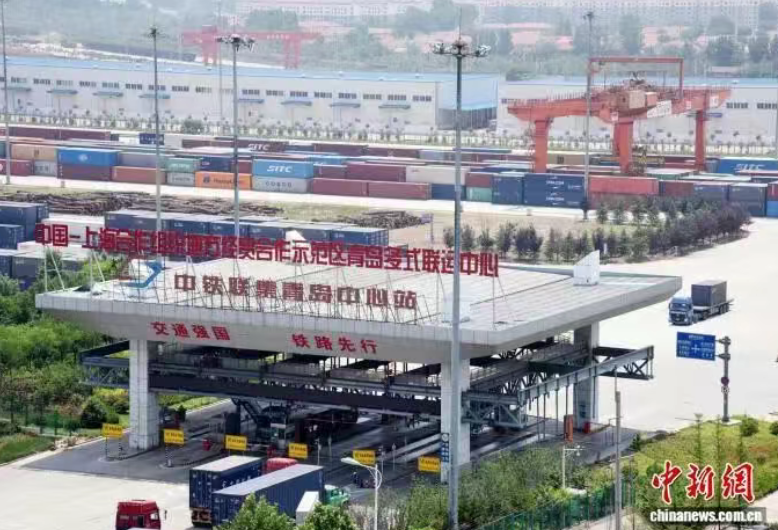
Sheng noted that based on this mechanism, Shandong has launched a series of pioneering explorations, providing replicable practical samples. Currently, Shandong is focusing on building a green engine, promoting enterprises to construct zero-carbon industrial parks in SCO member states, and systematically exporting green manufacturing standards as well as energy-saving and carbon-reduction transformation services. Meanwhile, it is building a digital engine by leveraging the China-SCO Local Economic and Trade Cooperation Demonstration Area, establishing a Silk Road e-commerce service center and an overseas warehouse network at core nodes, and facilitating the going global of digital technologies and standards for industrial internet, smart cities and other sectors.
Sheng stated that Shandong's practices have fully demonstrated that the core of deepening industrial cooperation with SCO member states lies in establishing a systematic collaborative mechanism. He suggested that in the next step, support should be given to regions with solid foundations and favorable conditions to continue taking the lead in piloting initiatives in areas including Silk Road e-commerce, cross-border transfer of green technologies, and coordinated layout of industrial chains, so as to provide feasible paths for optimizing the overseas layout of China's industrial chains amid the ongoing restructuring of global industrial chains.
Source: China News Network